Who is Really Making the Profit?
This is a great article that I came across. Please follow the links and learn some facts over fiction.
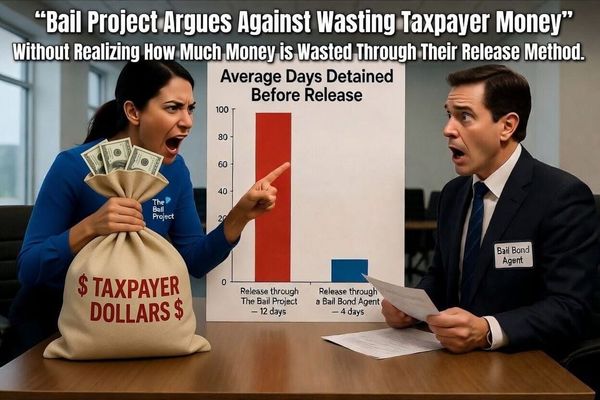
"The Business of Bail Reform: Who Profits When Commercial Bail Dies - Part 1"The article argues that bail reform—particularly the effort to eliminate commercial (secured) bail—is less about fairness and equity than it appears. Instead, it functions as a major financial shift: traditional bail, where defendants or families pay a non-refundable 10% fee to a bondsman (who then guarantees the full amount), is being replaced by "cashless" alternatives. These new systems move costs from the private sector onto taxpayers while opening profitable revenue streams for different private companies and organizations. bail-reform-truth-and-propaganda.ghost.io gives great insight to what is truly going on. Under the original model, private bondsmen assume financial risk for release. Bail reform typically substitutes this with electronic monitoring (ankle bracelets charged daily), mandatory drug testing, and algorithmic risk assessment tools. The author claims these alternatives often end up costing defendants and taxpayers more over time through recurring fees and expanded government administration. Meanwhile, the same foundations and nonprofits that spent hundreds of millions promoting reform also support or benefit from the new infrastructure. The piece cites collective foundation spending in the range of $700–800 million on bail reform efforts, with Arnold Ventures highlighted for investing $142 million in criminal justice reforms since 2011 (including $48 million specifically for pretrial initiatives).A central example is the November 2025 Chicago case involving Lawrence Reed, who had 72 prior arrests and was allegedly on electronic monitoring for a previous violent assault when he set a 26-year-old woman on fire on a train. The author uses this to illustrate the "predictable human cost" of reforms designed by academics and funded by billionaire foundations but implemented by strained public agencies, emphasizing increased public safety risks when high-risk individuals are released without traditional financial incentives for appearance.Overall, the article frames bail reform as creating a new multi-billion-dollar ecosystem that benefits electronic monitoring companies, drug testing firms, risk assessment vendors, and well-funded advocacy nonprofits—while taxpayers absorb the burdens and communities face the consequences of failures. It positions itself as the introduction to a seven-part investigative series that will "follow the money," with future installments examining private prison involvement, the growth of monitoring and testing industries, charitable bail funds, and the foundation networks driving the changes. The tone is skeptical, questioning whether the movement represents genuine reform or a profitable reallocation of resources.
Rulon Evans "Do it because it's the right thing!"